


What It Takes to Supply Pangasius to Brazil
19 October 2026
Supplying pangasius to Brazil involves more than getting the product on a vessel.
From our side, every shipment brings together product requirements, documentation, labelling, cold-chain controls and customer specifications. Each part needs to be considered before the container leaves Vietnam.
Brazil has become an increasingly important market for Vietnamese pangasius. In 2025, Brazil imported more than 50,000 tonnes of Vietnamese pangasius, around 49% more than the year before, according to FAO GLOBEFISH. [1]
As demand grows, having the right product is only part of the equation. Reliable supply also depends on how well the details are managed from preparation to delivery.
It starts before the container is loaded
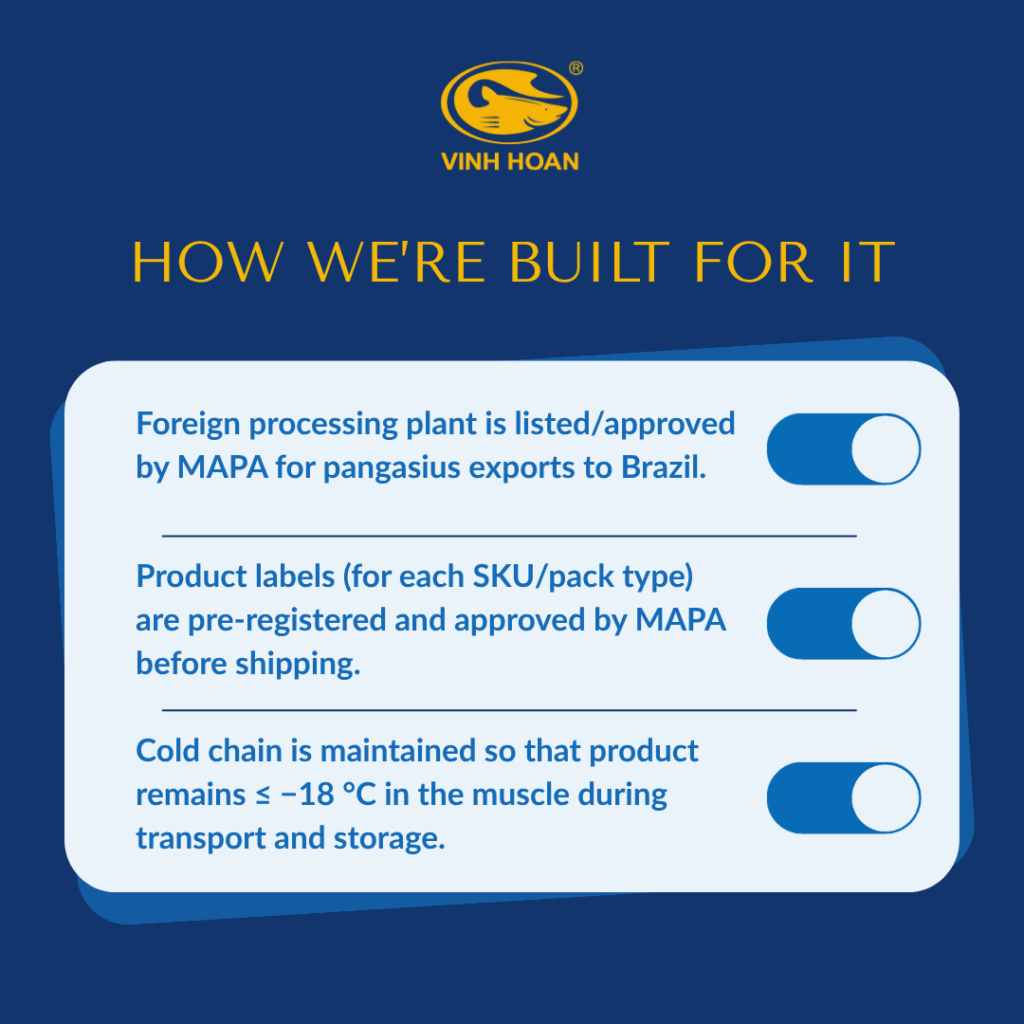
Before a shipment leaves our facility, we check the requirements that apply to the product and the Brazilian market.
This includes making sure the establishment is properly habilitated for export to Brazil, the product and label meet the applicable requirements, the required documentation is prepared, and the necessary conditions are maintained throughout handling, storage and transport. Brazil maintains specific requirements for foreign establishments and products of animal origin entering the country. [2][3]
These requirements are closely connected. A product can be ready for production, but the shipment is not ready until the supporting details are in place as well.
That is why we address these checks as part of the preparation process, rather than leaving them until the shipment reaches the port.
The product also needs to fit the customer
Regulatory compliance is one part of supplying Brazil. The other is making sure the product works for the customer.
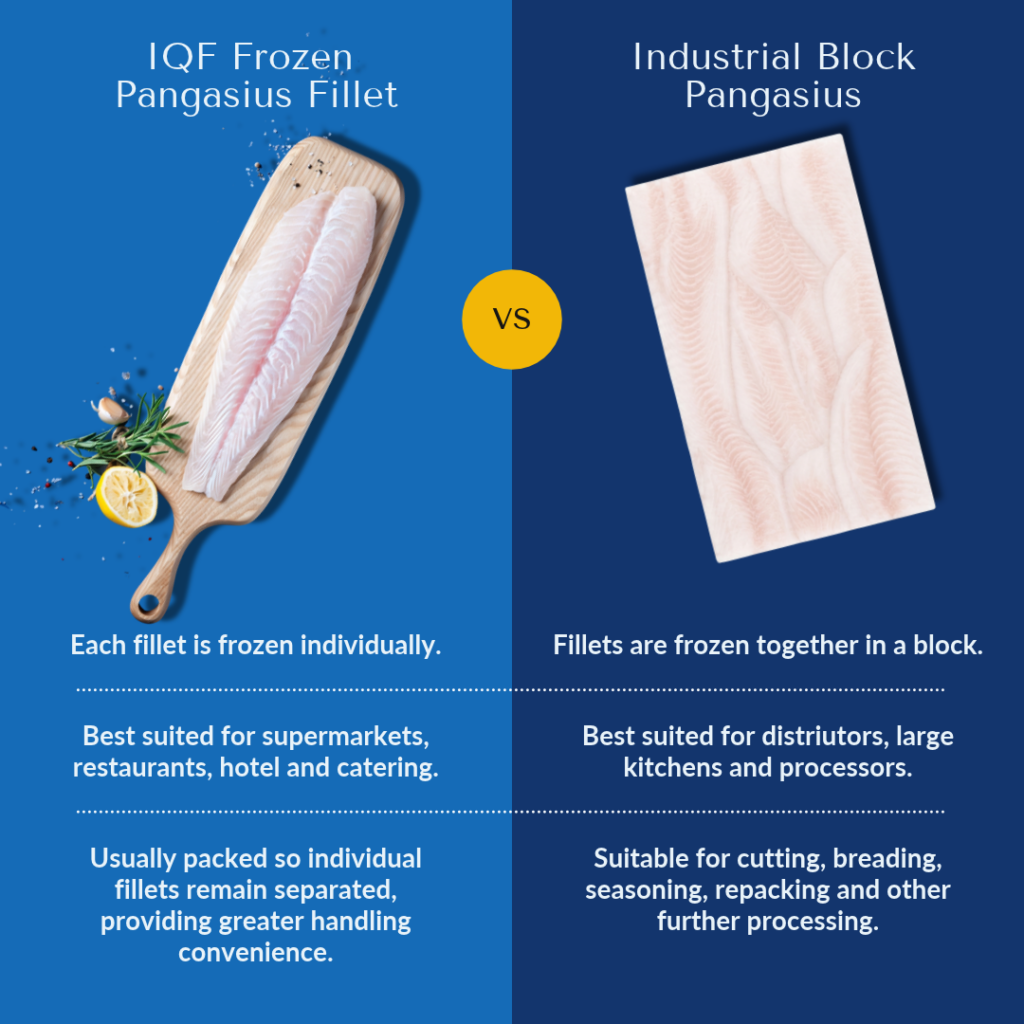
A foodservice customer may need a different format from a processor or retailer. Product specifications, pack formats and applications can vary depending on how the product will be used.
Vinh Hoan supplies frozen pangasius fillets in both IQF and block formats, supporting different applications and operating requirements.
For us, supplying the right product means understanding not only what can enter the market, but also what the customer needs to do with it.
Every label carries important information
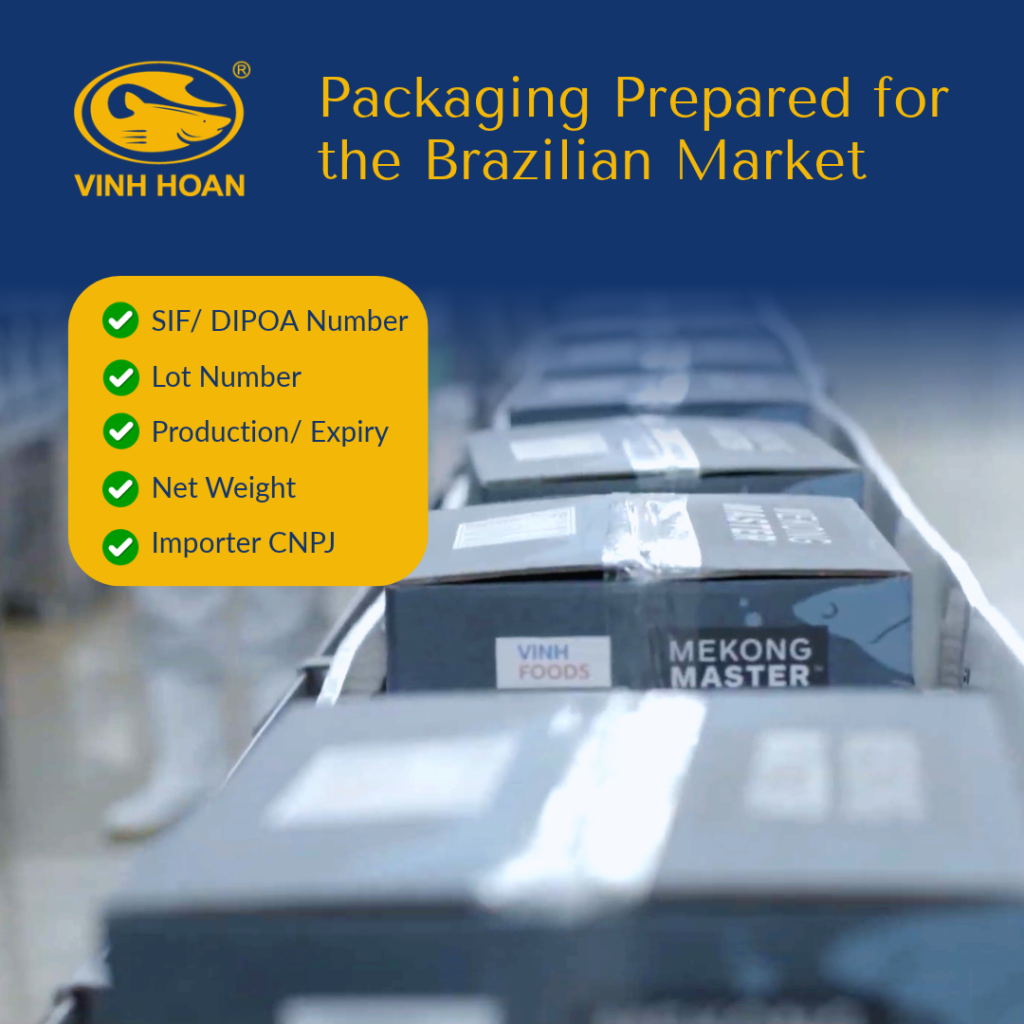
Labelling is another detail we review carefully before a shipment leaves.
For animal-origin products, Brazilian requirements cover product and establishment identification and other information required on the registered label. MAPA’s PGA-SIGSIF system is used for the registration of products and labels from foreign establishments habilitated to export to Brazil. [2][3]
The label also connects the finished product to the information behind it.
At Vinh Hoan, each lot can be linked to relevant production records, processing information and quality documentation. If a question comes up after delivery, this gives us the information needed to trace the product back through its production history.
Reliable supply is about getting the details right
A container arriving in Brazil is the final step of a process that starts much earlier.
Before it leaves Vietnam, we have already worked through the product requirements, customer specifications, documentation, labelling and shipment controls.
That is what reliable supply means to us.
Have questions supplying pangasius to brazil? We’re happy to help: https://www.vinhhoan.com/contact-us/
Sources
[1] FAO GLOBEFISH, GLOBEFISH Highlights – Pangasius, 2026.
[2] Ministério da Agricultura e Pecuária (MAPA), Importação de Produtos de Origem Animal.
[3] Ministério da Agricultura e Pecuária (MAPA), Requisitos Sanitários de Saúde Pública para Importação de Pescado e Derivados de Cultivo, February 2026.