
Corporate Profile
Madame Truong Thi Le khanh founded on December 27, 1997 and is headquartered in Cao Lanh City, Dong Thap province, Vietnam. We are one of Vietnam’s largest seafood exporters and is officially listed on the Ho Chi Minh City Stock Exchange (HOSE) since 2007.
Financial Statements
Investor News

Annual Reports
ANNUAL REPORT 2025
English
Vietnamese
ANNUAL REPORT 2024
English
Vietnamese

ANNUAL REPORT 2023
English
Vietnamese
ANNUAL REPORT 2022
English
Vietnamese
ANNUAL REPORT 2021
English
Vietnamese
ANNUAL REPORT 2020
English
Vietnamese
ANNUAL REPORT 2019
English
Vietnamese
ANNUAL REPORT 2018
English
Vietnamese
ANNUAL REPORT 2017
English
Vietnamese
ANNUAL REPORT 2016
English
Vietnamese
ANNUAL REPORT 2015
English
Vietnamese
ANNUAL REPORT 2014
English
Vietnamese
ANNUAL REPORT 2013
English
Vietnamese
ANNUAL REPORT 2012
English
Vietnamese
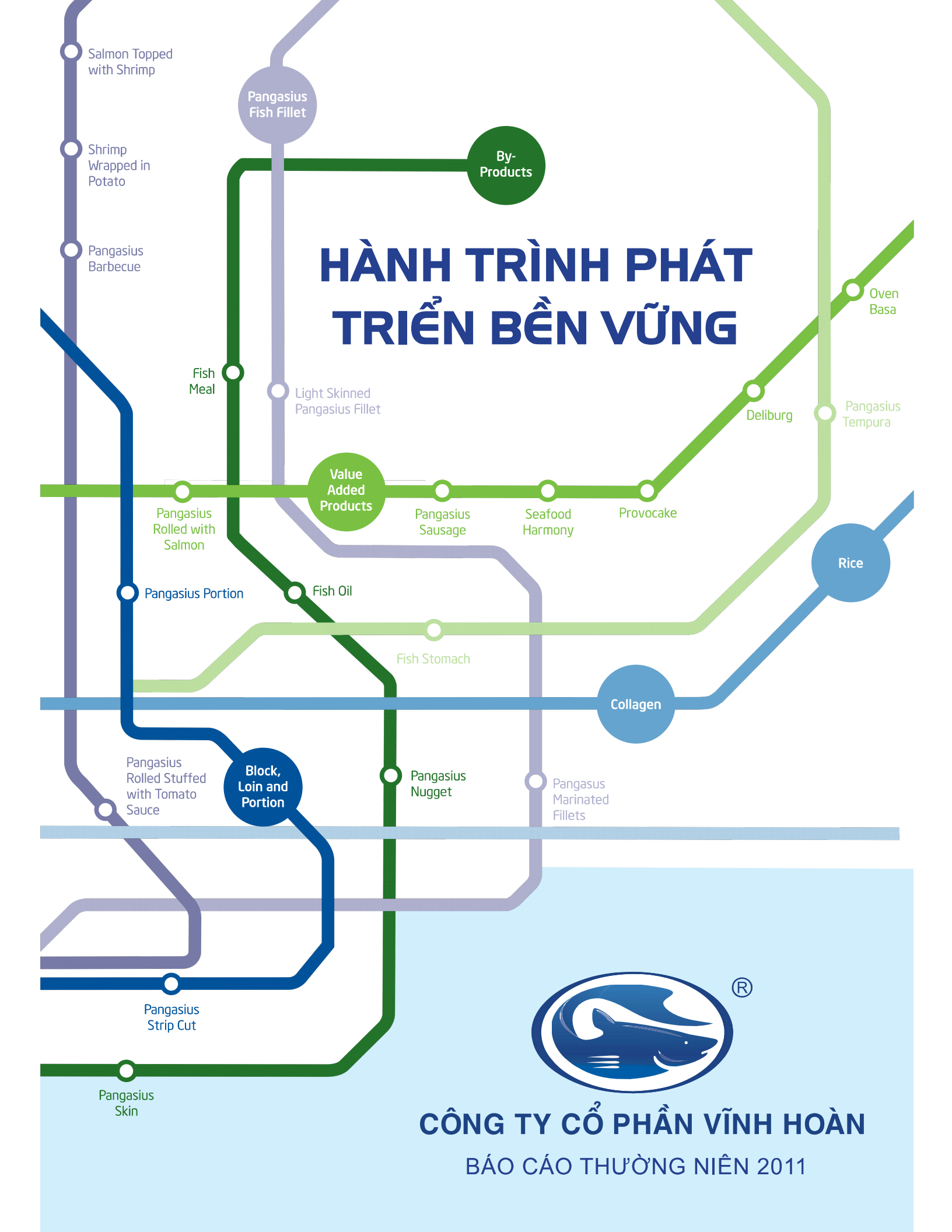
ANNUAL REPORT 2011
English
Vietnamese
ANNUAL REPORT 2010
English
Vietnamese
ANNUAL REPORT 2009
English
Vietnamese
ANNUAL REPORT 2008
English
Vietnamese
ANNUAL REPORT 2007
English
Vietnamese

Shareholders Meetings
Frequently Asked Questions
An update on the pangasius business performance in Q1 and the outlook for the upcoming quarters
2026 is projected to remain a challenging year regarding raw material supply. An increase in farming costs over the coming months is inevitable, as the costs of fingerlings and feed continue to trend upward.
Anticipating these challenges, with 30 years of industry experience and the strategic advantage of 75% raw material self-suppply, alongside subsidiaries specializing in fingerlings and aquafeed within our circular economy value chain, VHC is confident in its ability to proactively manage costs. This allows us to offer the most competitive pricing at any given time while ensuring both quality and the best interests of our customers.
Our top priority is to focus on the health and quality of our fingerlings to guarantee a stable supply and meet the stringent standards of both current and future orders.
“Vinh Hoan’s current level of raw material self-sufficiency is approximately 70–75%. We consider the 70–80% range to be optimal. Maintaining a portion of external sourcing allows us to capture real-time market signals and adapt production planning more flexibly. This balance supports stable and efficient operations.
To sustain this ratio over the medium and long term—especially as processing volumes increase to meet market demand—we continue to expand our farming areas annually. In parallel, we are also investing in strengthening our farming operations and workforce.”
What is the outlook for the Pangasius products over the next 3 to 5 years?
Pangasius continues to hold a strong competitive edge over other white fish alternatives, such as tilapia or wild-caught species, thanks to its price advantages, nutritional value, high adaptability in farming, and its potential for processing into diverse culinary products across various market segments.
The company’s strategy remains clearly: maintaining pangasius as our core business while expanding into other segments such as fruits and vegetables, noodles, and Collagen & Gelatin.
Notably, value-added product lines, such as breaded fish, possess immense growth potential. The company affirms that expanding into tilapia or new sectors is not because the pangasius segment has reached its saturation, but rather a strategic move to optimize our existing advantages and diversify revenue streams. In this strategy, pangasius remains the “backbone” of Vinh Hoan’s growth.
What is Vinh Hoan’s core competitive advantage?
With a pioneering, large-scale system of farming and processing facilities that meet top-tier international sustainability certifications, Vinh Hoan’s advantage does not lie in “price wars.” Instead, we focus on sustainable values, ranging from product excellence to our brand positioning in the global market.
Our strategic objective is to position Vinh Hoan as a choice defined by differentiation and guaranteed quality, rather than competing purely on price. This is the key factor in building long-term and sustainable partnerships with our customers.
Furthermore, a vital “asset” we have meticulously built over the years is our capability in corporate communication and industry crisis management. These intangible values create a formidable competitive barrier, reinforcing our leadership position in the sector.
* Strategic Advantages:
Our greatest advantage lies in the ability to leverage Vinh Hoan’s established global distribution network and brand reputation. Due to the high similarity in product quality standards across our business lines, the Company is fully capable of synchronizing our facilities and human resources to rapidly achieve equivalent international certifications. This synergy creates a powerful momentum for our new business segments to break through and scale effectively in the global market.
* Revenue Performance:
Rice-based Products: This segment has delivered very positive results within the Group’s revenue structure. In 2025, revenue reached approximately VND 800 billion, and we have set a growth target of VND 850 billion for 2026.
Fruits & Vegetables: The current revenue scale for this segment has reached approximately USD 20 million (equivalent to VND 520 billion).
What is Vinh Hoan’s development strategy for the Tilapia segment?
Vinh Hoan has researched tilapia for over 20 years, but now is the appropriate time as U.S. tariff policies toward Chinese goods are opening up great opportunities for Vietnam. However, Vinh Hoan’s strategy is sustainable development rather than merely taking advantage of short-term benefits from tax fluctuations. Vinh Hoan identifies this as a major game on an international scale with strong competitors from China and Indonesia. Therefore, Vinh Hoan will implement cautious steps: from experimental farming and building a closed-loop supply chain to optimizing feed mills for scaled fish. We are confident that the quality of Vietnamese tilapia is completely superior, but we will start from the root with fingerlings to ensure long-term competitiveness in the U.S. and many other markets.
Despite the great potential, to ensure the safety of the financial plan, tilapia revenue has not been included in the 2026 target structure. Vinh Hoan will prioritize perfecting the foundation before officially recognizing the contribution of this segment to the overall business results.
On 17 January 2025, in Washington D.C., the Ministry of Industry and Trade, under authorization from the Government of Vietnam, signed a Bilateral Agreement with the Government of the United States regarding the anti-dumping duties imposed on Vietnamese fish fillets. The agreement was signed with the U.S. Government’s representative, the Office of the United States Trade Representative (USTR). Under this agreement, Vinh Hoan Corporation — the only company eligible for duty removal under U.S. regulations — was exempted from anti-dumping duties on its pangasius exports to the United States.
Regarding the reciprocal import tariff announced by the U.S. administration in early April 2025 and applied to all exporters shipping products to the United States, the current tariff rate is 20%.
The Company does not maintain inventory in the U.S. Any existing inventory is only short-term due to procedural requirements. The movement of goods in 2025 was carried out according to customer contracts and timed strategically to ensure customers could benefit from low countervailing duty rates applied by the U.S. government.
In the U.S. market, constant policy changes have led to a cautious sentiment regarding inventory buildup among distributors. With current inventory levels at a low threshold, the demand for restocking is showing very positive signals. Alongside the favorable growth prospects in the U.S., the Company is proactively diversifying its markets, focusing on regions with purchasing power that aligns with the value of our products.
The performance and Strategic direction of the Collagen & Gelatin segment?
The Collagen segment currently contributes stably to the Group’s total revenue, with a scale ranging from VND 900 to 1,000 billion. This is a high-tech segment refined from fish skin, a testament to Vinh Hoan’s circular economy model. After 10 years of development with two capacity expansions, this segment now possesses profit margins that significantly outperform traditional products within the ecosystem.
Although 2025 saw a slight decline due to price competition from Indian partners (a consequence of the US reciprocal tariff imposed on India causing them targeting more aggressively in the other markets), the first quarter of 2026 has recorded a strong recovery. Vinh Hoan’s strategy is to avoid falling into a low-price race. Instead, Vinh Hoan focuses on researching specialized product lines, positioning them in the premium segment to create complete differentiation and avoid direct competition with mass-market products.
How do global conflicts and geopolitical tensions affect the Company’s operations?
In the context of complex geopolitical conflicts in Ukraine and the Middle East, the seafood industry faces a mix of challenges and opportunities.
Opportunities: On one hand, the global scarcity of wild-caught raw material and the escalating costs of other whitefish species are opening up significant growth space for pangasius. This creates favorable conditions for Vietnamese pangasius products to become a superior alternative choice.
Challenges: On the other hand, we face direct pressure from rising fuel prices, leading to scarcity and price hikes in raw materials, supplies, and packaging. The Vinh Hoan team consistently strives to maximize flexibility through cross-departmental coordination. Production planning and material forecasting are strictly executed to ensure order progress at the most optimized costs.
Core Focus for 2026: Furthermore, the core mission for 2026 and the following years is to focus on improving fish fingerlings quality and fully leveraging the advantages of the circular economy chain. This is the key for us to both maintain effective cost control and stay ready to fully exploit the expanding market opportunities ahead.
The driving forces for Vinh Hoan’s continued growth in the coming period?
After three decades, Vinh Hoan assesses that the growth potential for pangasius remains immense, potentially reaching up to 50%. In the context of scarce wild-caught supply and geopolitical volatility, pangasius has the opportunity to replace other whitefish species globally. Developing demanding markets such as the U.S., Germany, or Spain is the clearest testament to Vinh Hoan’s superior competitiveness.
Vinh Hoan’s core growth driver stems from optimizing the value chain, with a particular focus on the fingerling stage. Collaborating with leading industry experts and establishing our own breeding company allows us to secure raw material sources while realizing our commitment to Net-zero and sustainable development. With pangasius revenue consistently accounting for 70-80% of our total turnover, we are confident in maintaining our market leadership and responding flexibly to market fluctuations.